
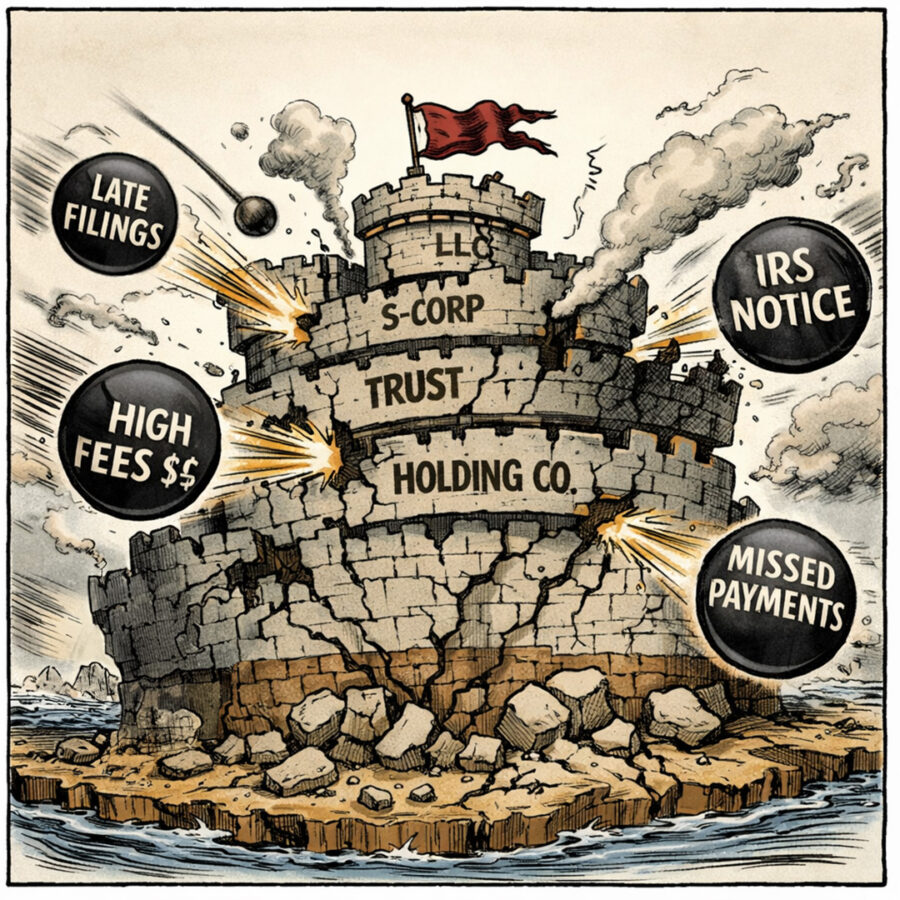
Dr. Carter had reached a point where there was something real to protect. His practice was producing strong income, he had built meaningful assets, and the stakes were higher than ever. So when he was presented with a strategy that promised stronger protection and lower taxes, it felt like the responsible next step. He built what looked like a fortress: a practice entity, real estate entity, management company, equipment leasing LLC, and a family trust. But each layer added complexity. CPA fees climbed, intercompany payments became inconsistent, an IRS notice flagged reporting issues, and a missed filing even dissolved one of his LLCs. What was meant to reduce stress became the source of it.
The turning point came when he worked with a dental-focused CPA and advisor who asked a simple question: does each entity serve a real purpose today? Most did not. They simplified. Redundant structures were removed, agreements were cleaned up, and what remained was intentional and manageable. For the first time in years, Dr. Carter felt in control again. Not because he had built more protection, but because he finally had clarity.
Dr. Carter’s story is common because the fear behind it is human. Dentists are not trying to game the system. They are trying to protect what matters.
The mistake is believing that complexity equals safety.
In reality:
- Every entity must have a clear job. Practice, real estate, or a specific asset. Nothing more.
- Compliance matters more than quantity. Missed filings erase protection faster than lawsuits ever will.
- Simplicity is strength. Two well run entities protect better than six neglected ones.
- Real protection comes from disciplined habits, clean accounting, and doing the basics consistently.
Structure should create confidence, not confusion.
What to Do Instead
If your current setup feels heavy, unclear, or fragile, that is your signal.
Start here:
- Review your entities annually and ask whether each still serves a purpose.
- Keep personal and business finances separate, every time.
- Prioritize clean books, proper payroll, and real contracts over clever structures.
- Build protection intentionally, not reactively. Your business should support your life, not complicate it.
You do not need a fortress of entities to protect your practice.
You need a structure you understand, a plan you can maintain, and advisors who help you think clearly when fear shows up.
| Before | After |
| 5 entities, 6 tax returns | 2 entities, 2 tax returns |
| $9,000 per year in CPA costs | $3,500 per year |
| Missed filings and confusion | Streamlined compliance |
| High stress, little clarity | Clean books and confidence |
The Bottom Line
A strong dental practice entity structure is not about how many entities you have. It is about whether your structure is clear, compliant, and aligned with your financial and tax strategy.
The most effective dental practice owners focus on simplicity, proper entity setup, and ongoing maintenance. That means clean bookkeeping, consistent compliance, and working with a dental CPA who understands how to balance asset protection, tax efficiency, and operational clarity.
If your current structure feels overly complex or difficult to manage, it may be time for an entity structure review. The right approach can reduce CPA costs, improve compliance, and give you a clearer path to long term financial stability.