
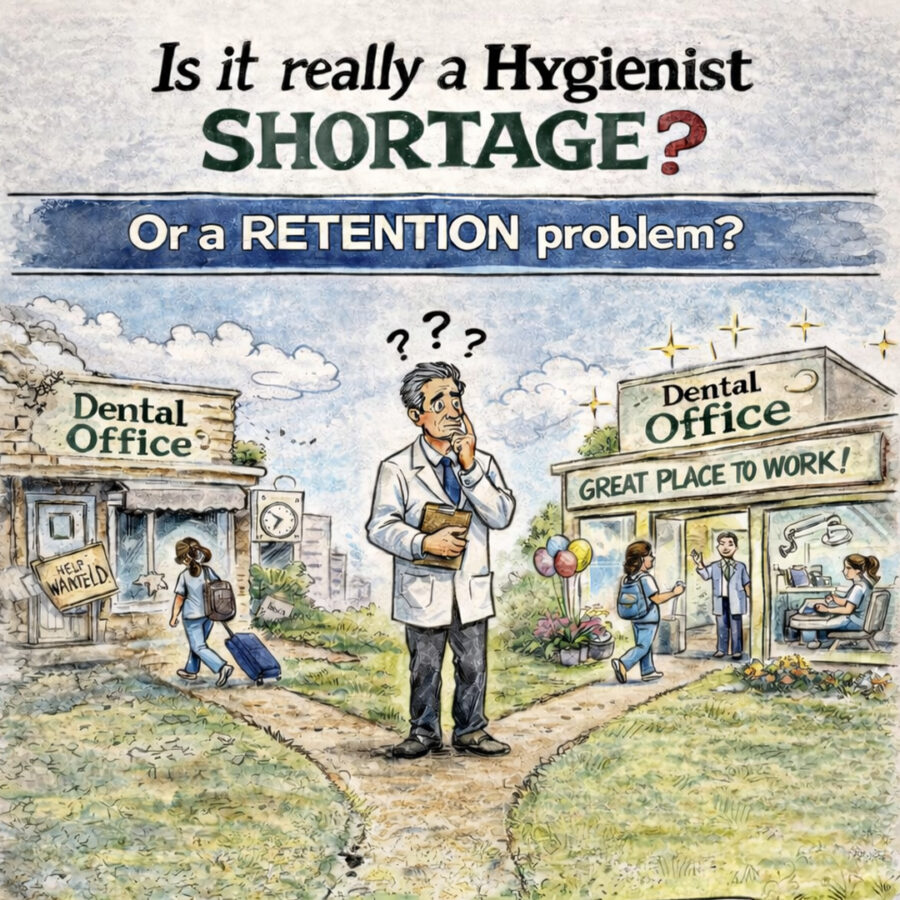
Recently, while listening to an episode of The Art of Dental Finance and Management podcast discussing the future of dental hygiene, it sparked an interesting conversation internally among our advisory team.
From a clinical perspective, the discussion focused on workforce shortages and the challenges many dentists face when hiring hygienists. But from a financial and practice management standpoint, it raised a different question.
Is the real issue always a shortage of hygienists?
Or is it sometimes a retention and culture problem inside the practice?

You can listen to the full episode here:
https://www.youtube.com/watch?v=NNeTq3oQy-A&feature=youtu.be
Across the country, some practices struggle to hire hygienists while others consistently attract and retain strong teams. That contrast is worth examining.
In many cases, hygienists are not leaving dentistry entirely. They are leaving environments that make the job unsustainable.
What Dental Hygienists Say They Want from Employers
When hygienists discuss why they leave positions, the themes tend to be remarkably consistent:
- Workplace culture that feels respectful and collaborative
- Compensation that grows over time
- Reasonable scheduling flexibility
- Modern equipment that supports good clinical work
When those elements are missing, hiring becomes significantly harder. When they are present, practices often develop a reputation locally as a great place to work.
Why this matters for practice owners
From a financial perspective, hygiene turnover is more expensive than many owners realize.
When a hygienist leaves, the cost goes beyond recruiting and onboarding. Practices often face temporary staffing fees, schedule disruptions, lost patient continuity, and the time required to hire and train a replacement.
Those disruptions translate directly into lost production.
If a hygienist typically produces $1,200 to $1,500 per day, even a few weeks of inconsistent coverage can mean tens of thousands of dollars in lost revenue. Temporary coverage often costs more while providing less continuity for patients.
Because of this, the most cost-effective strategy is often not hiring faster. It is creating an environment that makes people want to stay.
Practices with strong hygiene retention tend to focus on a few practical habits:
Make retention part of leadership, not HR
Regular check-ins with team members help identify frustrations early before they lead to resignations.
Invest in the operatory
Modern instruments, ergonomic equipment, and reliable technology allow hygienists to work comfortably and efficiently.
Build flexibility into the schedule
Predictable but flexible scheduling helps hygienists balance personal responsibilities while maintaining consistent availability.
Create a predictable compensation path
Regular compensation reviews build trust and reduce the tension that often leads employees to explore other opportunities.
Address culture issues quickly
One negative personality can quietly drive turnover across an entire team if expectations around professionalism are not enforced.
When these elements are in place, hiring often becomes easier as well. Reputation spreads quickly among hygienists within local professional communities.
Investing in retention is not just a cultural decision. It is often the most financially efficient staffing strategy available to a practice.
A practical way to think about the hygiene shortage
When dentists ask why hiring hygienists has become so difficult, the conversation often focuses on supply.
But the more useful question may be about retention.
Practices that struggle to hire hygienists often experience frequent turnover. Practices that retain hygienists for many years rarely describe hiring as a constant challenge.
From an operational and financial perspective, the difference usually comes down to a few controllable factors: workplace culture, schedule flexibility, reliable equipment, and predictable compensation.
In other words, what many practices describe as a hygienist shortage is often a retention problem that compounds over time.
When hygienists stay longer, patients maintain continuity of care, schedules remain stable, and hiring becomes easier because the practice develops a reputation as a strong workplace.
For dentists evaluating staffing challenges, the most effective question may not be “How do we find hygienists?”
It may be:
“What kind of practice environment makes hygienists want to stay?”